| - | - | - |
|---|---|---|
| Product Group | : | Antibacterials |
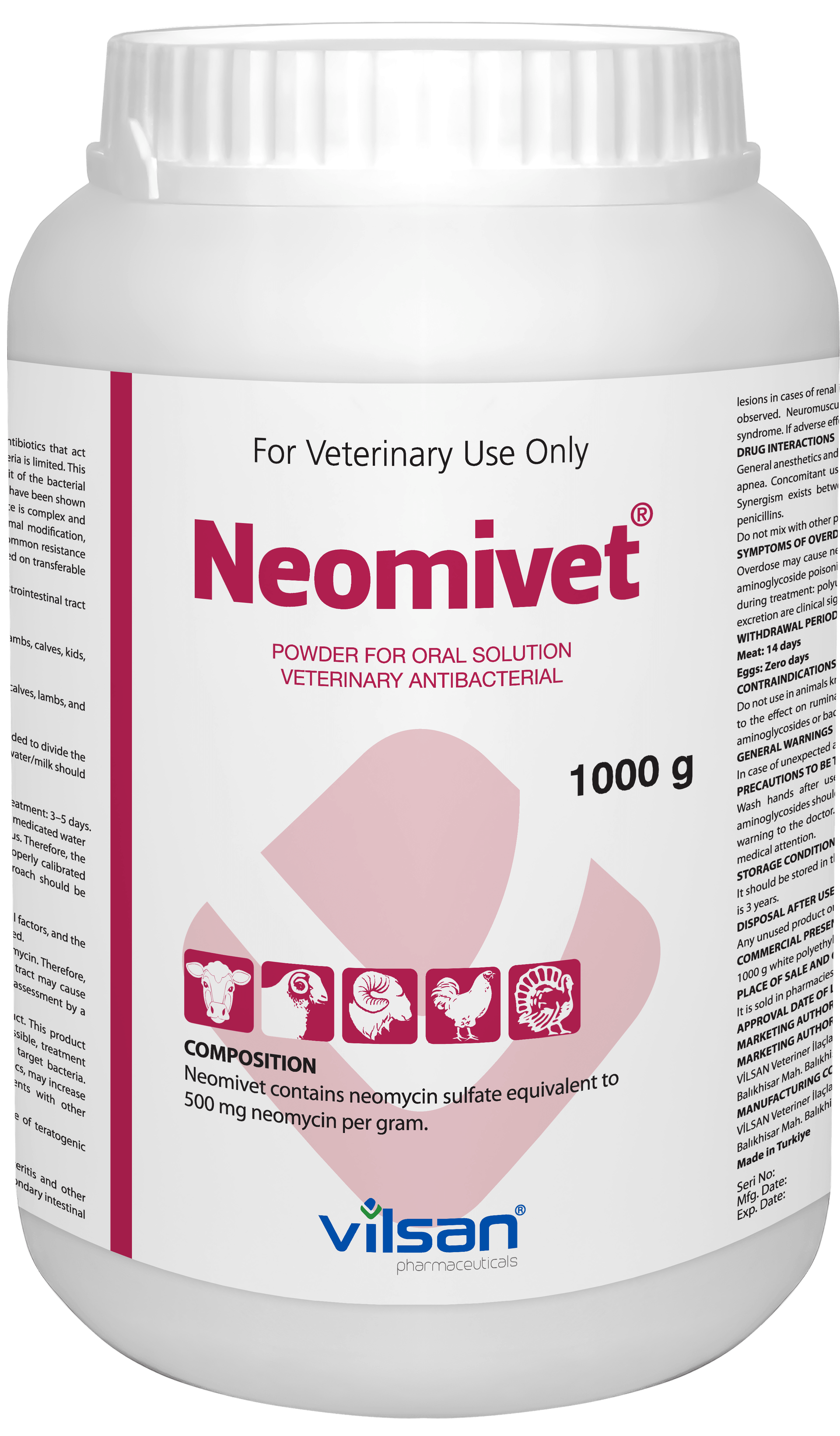
| Pharmaceutical Form | : | Powder for Oral Solution |
| Active Ingredient | : | Neomycin sulfate |
| Target Animal | : | Calf, Lamb, Goat, Chicken, Turkey |
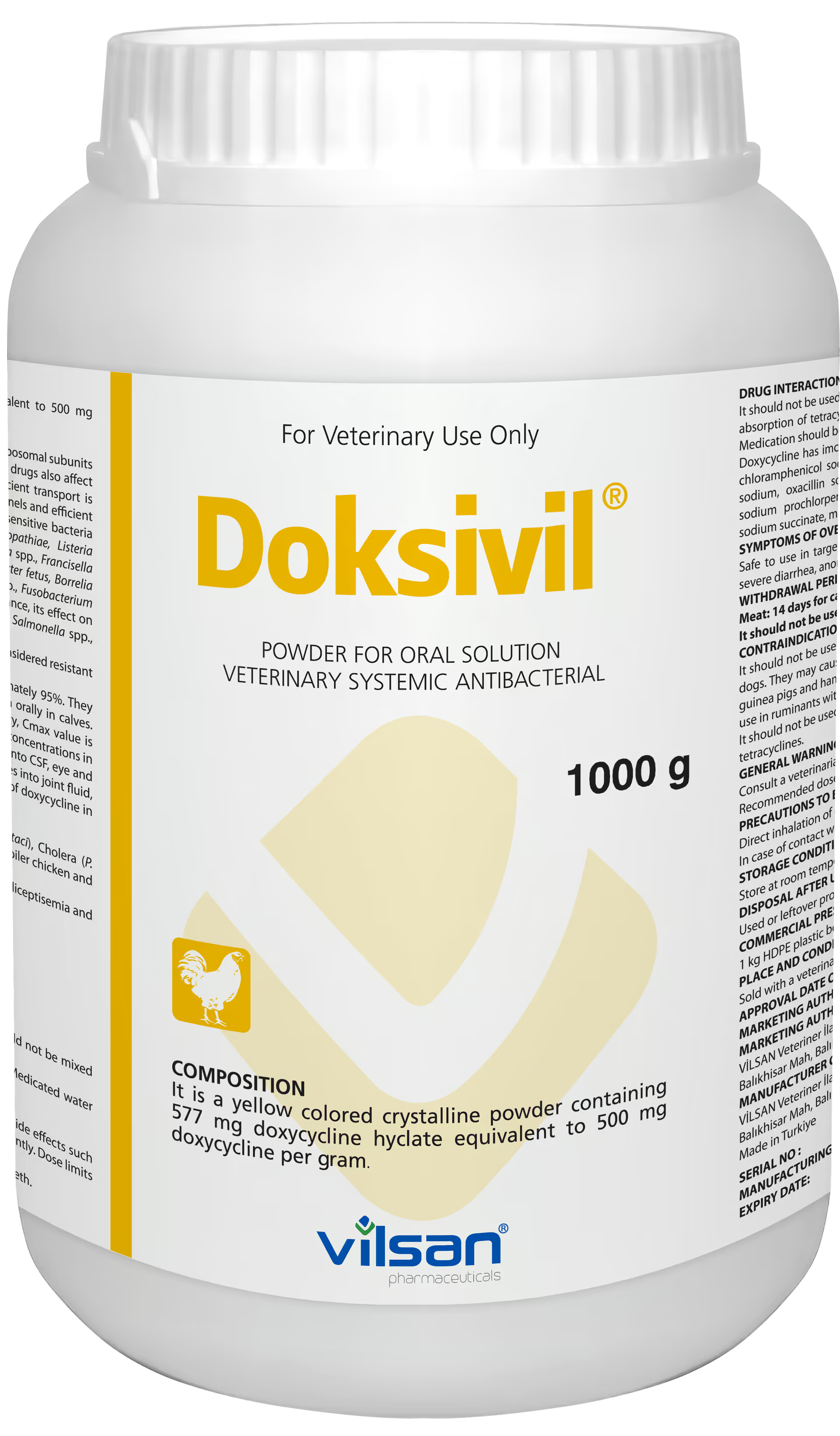
| Package Form | : | In 1000 g white polyethylene buckets |
COMPOSITION
Neomivet contains neomycin sulfate equivalent to 500 mg neomycin per gram.
PHARMACOLOGICAL PROPERTIES
Neomycin is an antibiotic from the aminoglycoside group. Aminoglycosides are broad-spectrum antibiotics that act primarily against gram-negative bacteria, especially Escherichia coli. Their effect on gram-positive bacteria is limited. This group of antimicrobial agents is not effective against anaerobes. Neomycin binds to the 30S subunit of the bacterial ribosome and exerts its effect by inhibiting bacterial protein synthesis. At high doses, aminoglycosides have been shown to exert bactericidal and bacteriostatic effects by damaging the cell wall. The mechanism of resistance is complex and varies among aminoglycoside molecules. Four resistance mechanisms have been identified: ribosomal modification, decreased permeability, enzymatic inactivation, and modification of the molecular target. The most common resistance mechanism is the production of enzymes that modify aminoglycosides. This mechanism may be located on transferable genetic elements, thus facilitating the spread of resistance.
Neomycin is very poorly absorbed from the gastrointestinal tract. In neonates, absorption from the gastrointestinal tract can be significant. About 90% of orally administered neomycin is excreted in the feces.
AREA OF USE/INDICATIONS
It is used for the treatment of gastrointestinal infections caused by bacteria susceptible to neomycin in lambs, calves, kids, chickens, and turkeys.
USAGE AND DOSAGE
It is administered orally by mixing with drinking water in chickens and turkeys, and with water or milk in calves, lambs, and kids.
· Calves, lambs, kids:
20–30 mg/kg body weight/day (approximately 1 g powder per 20 kg body weight daily). It is recommended to divide the daily dose into two administrations, morning and evening. Duration of treatment: 3–5 days. Medicated water/milk should be consumed immediately.
· Chickens and turkeys:
20–30 mg/kg body weight/day (approximately 5 g powder per 100 kg body weight daily). Duration of treatment: 3–5 days.
For accurate dosing in all species, body weight should be calculated as precisely as possible. The intake of medicated water may vary depending on husbandry conditions, breed, age, environmental factors, and the disease status. Therefore, the concentration of the medicated water may need to be adjusted to ensure the correct dosage. Use properly calibrated measuring equipment. If no response to treatment is observed within 3 days, the therapeutic approach should be reassessed.
SPECIAL CLINICAL INFORMATION AND SPECIAL WARNINGS FOR TARGET SPECIES
The intake of medicated water may vary depending on husbandry conditions, breed, age, environmental factors, and the disease status. In animals unable to consume medicated water, parenteral treatment should be considered.
In neonates, gastrointestinal permeability is increased, which may lead to enhanced absorption of neomycin. Therefore, use in these animals requires special caution. High absorption of neomycin from the gastrointestinal tract may cause ototoxicity and nephrotoxicity. In neonates, this product should only be used following a benefit/risk assessment by a veterinarian.
National and regional antimicrobial policies must be taken into consideration when using this product. This product should be used based on susceptibility testing of bacteria isolated from the animals. If this is not possible, treatment should be based on local (regional, farm-level) epidemiological information on susceptibility of the target bacteria. Improper use of the product, contrary to the instructions given in this summary of product characteristics, may increase the prevalence of bacteria resistant to aminoglycosides and reduce the effectiveness of treatments with other aminoglycosides due to potential cross-resistance.
Use during pregnancy, lactation and lay: Studies in laboratory animals have not provided evidence of teratogenic effects of neomycin.
ADVERSE EFFECTS
Aminoglycosides are generally poorly absorbed from the gastrointestinal tract (<10%). However, enteritis and other pathological changes may increase absorption, and toxic levels may cause acute tubular necrosis and secondary intestinal lesions in cases of renal insufficiency. Allergic reactions may occur. Effects on renal function, hearing, and balance may be observed. Neuromuscular blockade may be enhanced. Repeated dosing may cause diarrhea and malabsorption syndrome. If adverse effects occur, treatment should be discontinued.
DRUG INTERACTIONS
General anesthetics and muscle relaxants may enhance the neurotoxic effects of aminoglycosides, leading to paralysis and apnea. Concomitant use with potentially ototoxic and nephrotoxic drugs and potent diuretics is not recommended. Synergism exists between aminoglycosides and beta-lactam antibiotics. Neomycin reduces the absorption of oral penicillins.
Do not mix with other products.
SYMPTOMS OF OVERDOSE, PRECAUTIONS AND ANTIDOTE
Overdose may cause nephrotoxicity and ototoxicity. Non-oliguric renal failure is the most common clinical condition in aminoglycoside poisoning. Although generally reversible, recovery may be delayed. Renal function should be monitored during treatment: polyuria, decreased urinary osmolality, enzymuria, proteinuria, cylindruria, and increased bicarbonate excretion are clinical signs of aminoglycoside-associated nephrotoxicity.
WITHDRAWAL PERIODS
Meat: 14 days
Eggs: Zero days
CONTRAINDICATIONS
Do not use in animals known to be hypersensitive to aminoglycosides or any of the excipients. Do not use in ruminants due to the effect on ruminal flora. Do not use in cases resistant to aminoglycosides. Do not use in combination with other aminoglycosides or bacteriostatic products.
GENERAL WARNINGS
In case of unexpected adverse effects, consult a veterinarian. Keep out of reach of children.
PRECAUTIONS TO BE TAKEN BY THE ADMINISTRATOR AND WARNINGS FOR VETERINARY SURGEON
Wash hands after use. Avoid contact with the product or medicated water. People known to be sensitive to aminoglycosides should not handle the product. In case of skin reactions (e.g., redness), seek medical advice and show this warning to the doctor. Swelling of the face, lips, or eyes, or difficulty breathing are serious symptoms requiring urgent medical attention.
STORAGE CONDITIONS AND SHELF LIFE
It should be stored in the original packaging, protected from light, below 25°C, without refrigeration or freezing. Shelf life is 3 years.
DISPOSAL AFTER USE AND WARNINGS FOR NON-TARGET SPECIES
Any unused product or waste material should be disposed of in accordance with local requirements.
COMMERCIAL PRESENTATION FORM
1000 g white polyethylene containers, without box.
PLACE OF SALE AND CONDITIONS
It is sold in pharmacies with a veterinary prescription, as well as in veterinary clinics, polyclinics, and animal hospitals. (VSP)
APPROVAL DATE OF LEAFLET: 21.12.2022
MARKETING AUTHORIZATION DATE AND NUMBER 02.05.1991-007/0618
MARKETING AUTHORIZATION HOLDER
VİLSAN Veteriner İlaçları Tic. ve San. A.Ş.
Balıkhisar Mah. Balıkhisar Köy İçi Küme Evleri No:765A Akyurt/Ankara-Türkiye
NAME AND ADDRESS OF MANUFACTURER
VİLSAN Veteriner İlaçları Tic. ve San. A.Ş.
Balıkhisar Mah. Balıkhisar Köy İçi Küme Evleri No:765A Akyurt/Ankara-Türkiye
Made in Turkiye